What Is an MRL Elevator? Machine-Room-Less Lifts Explained
An MRL elevator is a traction lift whose drive machine sits inside the top of the lift shaft instead of in a separate machine room above it. That single change removes a room from your building while keeping the counterweight efficiency and ride quality of a traction lift, which is why machine-room-less designs have become the default for a great deal of new residential and low-to-mid-rise construction in India. This guide explains how they work, their pros and cons, and when a machine room or a hydraulic lift is still the better answer.
What does MRL mean?
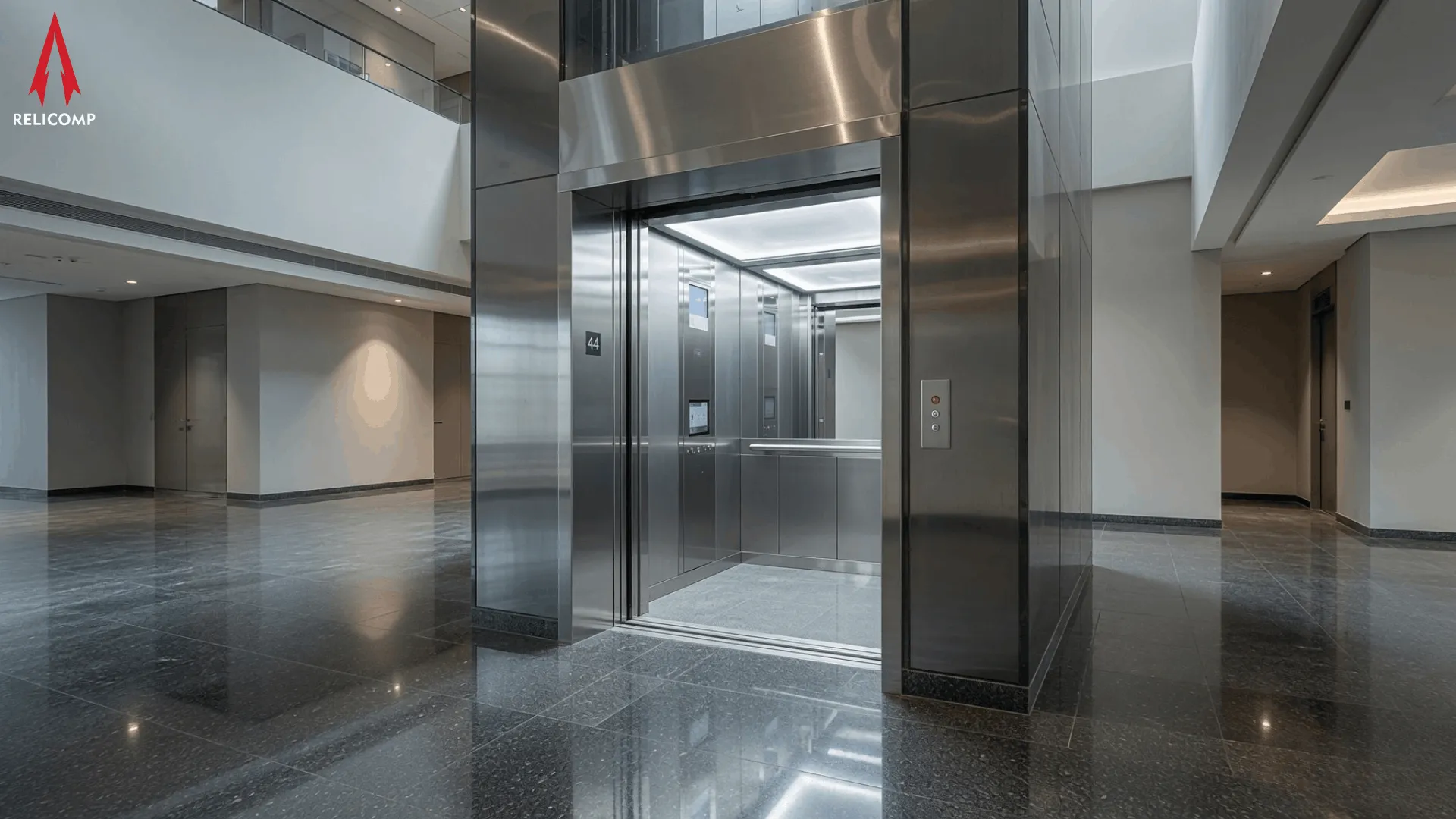
MRL stands for machine-room-less. In a conventional traction lift, the motor, sheave, brake and controller live in a dedicated machine room, normally directly above the shaft. In an MRL lift, a compact gearless machine is mounted within the shaft itself, usually at the head, and the controller moves into a slim cabinet at a landing. The lift still works on the same principle as any traction lift: the car hangs on ropes or belts over a driven sheave, balanced by a counterweight.
The enabling technology is the permanent-magnet gearless machine. Removing the gearbox made the machine small and flat enough to live inside the shaft, and gearless drive also cut energy consumption and improved ride smoothness. An MRL is therefore not a compromise version of a traction lift; it is a traction lift with its machinery relocated.
Advantages of a machine-room-less lift
- No machine room: you recover the floor area and avoid building, waterproofing and servicing a room above the shaft, often the single largest civil saving on a new build
- Lower energy use: gearless permanent-magnet machines with a counterweight are efficient, and many designs can return energy during regenerative phases
- Smooth, quiet ride: gearless drive with modern control removes gearbox noise and improves levelling accuracy
- Cleaner architecture: nothing projects above the roofline, which matters where height is restricted or the elevation is a design concern
- Design freedom: no machine-room slab means fewer constraints on what sits above the shaft
On a project where the machine room would otherwise have to be built, the civil saving frequently offsets a good part of the equipment difference. That is the calculation worth doing rather than comparing equipment line items alone.
Disadvantages and honest limitations
- Headroom still matters: the machine lives at the top of the shaft, so MRL is not a solution for genuinely minimal headroom
- Maintenance access is at shaft-top rather than in a room, which technicians must be equipped and trained for
- Rescue in a power failure needs an automatic rescue device or battery drive, as with any traction lift
- Heat and ventilation at the shaft head need designing for, since the machine is inside the shaft
- Component specificity: gearless machines and their drives are less generic than older geared equipment, so spares and service depend more on the manufacturer being around
That last point is worth taking seriously when choosing a supplier. An MRL is a long-lived asset whose drive and controller are specific to its maker, so manufacturer continuity and local service capability are part of the specification, not an afterthought. Relicomp manufactures at Magadi and maintains what it installs through lift AMC.
MRL vs machine-room traction vs hydraulic
The three-way comparison is the one most buyers actually need. Conventional traction keeps the machine in a room, which costs civil work and area but gives the easiest maintenance access and scales to the tallest buildings. Hydraulic has no counterweight and is driven by a fluid ram, which makes it the answer where headroom is very tight and allows the car to be lowered on fluid release in a power failure, at the cost of higher energy use and limited travel. MRL sits between them and suits most new low-to-mid-rise work.
The full side-by-side table, including pit, speed, energy and power-failure behaviour, is in hydraulic vs traction elevator, and the product-level detail is on the MRL elevators, traction elevators and hydraulic elevators pages.
Is an MRL elevator right for your building?
MRL is usually the right starting assumption for a new-build home, villa or apartment block of a few floors where headroom is workable and nobody wants to build a machine room. It is a weaker fit where headroom is severely constrained, where the building is tall enough to need conventional traction's speed and traffic handling, or where a retrofit shaft simply cannot accommodate a shaft-head machine.
- 1Confirm the clear headroom above your top served floor, including beams, tanks and any sloping roof
- 2Confirm whether a machine room could exist, and what that floor area is worth to you
- 3Set expected usage honestly: a villa and a 40-flat block have different duty cycles
- 4Check who will maintain it locally, and whether spares for that machine are obtainable
- 5Ask whether a rescue device is included or optional in the quotation
What does an MRL elevator cost?
MRL equipment typically prices above an equivalent geared machine, and the comparison only makes sense once the machine-room civil cost is included on the other side of the ledger. Travel, stops, capacity, cabin finishes and site access then move the total as they would for any lift. Relicomp quotes after a survey rather than publishing a fixed rate; the budgeting framework is in the home lift price guide and the installation scope in the elevator installation cost guide.
Summary
An MRL elevator is a traction lift with a compact gearless machine inside the shaft head and no separate machine room. It keeps counterweight efficiency, delivers a smooth quiet ride and saves the civil cost of a machine room, while still needing workable headroom, shaft-top maintenance access and a rescue device. For most new low-to-mid-rise buildings in India it is the sensible default, and a free site survey will confirm whether your headroom allows it.
Frequently asked questions
Keep reading
Check whether an MRL fits your shaft
Send the clear headroom above your top floor, the pit depth available, your number of stops and expected usage. We will confirm whether MRL works for your building or recommend the drive that does.